First Look at the Purple iPhone 12 and the Spring 2021 Apple Accessories

Untitled

Untitled

Untitled

The shade of purple on the new Purple iPhone 12 is just such a fantastic color. In the whole iPhone 12 and 12 Pro lineup there is no other color that comes close to it. As mentioned in a previous post, if Apple had released this color on launch day I would not have picked blue for my iPhone 12 mini. The blue for the 12 mini is decent, but it is way too dark for my liking. I prefer something brighter or visually more striking than a dark shade of blue for my main iPhone. As far as blue on iPhones go nothing has beaten the blue on the iPhone XR even today.

Untitled

But Apple also just released what was probably the best shade of blue for its accessories since they started making accessories seriously half a decade ago.

Untitled

Capri Blue, which is probably best described as a more saturated version of Surf Blue, is my favorite shade of blue that Apple has released so far. It joins Amethyst as the most popular colors for official accessories this season.

Untitled

Untitled

Untitled

Untitled

Unlike Amethyst, however, Capri Blue is available on the Apple Watch Sport Band as well, so it is a double whammy of accessories to buy for blue lovers this time around.

Untitled

Untitled

Amethyst, along with its leather variant Dark Violet, was released to compliment the Purple iPhone 12 and 12 mini, and looks superb, probably only the second best purple Apple has ever released for accessories, after Ultra Violet a few years ago. Dark Violet, on the other hand, is disappointing. Purple dye on leather is probably way too hard to do correctly.

Untitled

Untitled

I also managed to take a look at the various official AirTag accessories, including the Hermès ones. I have to say, they do not feel any different in quality from the Apple leather accessories, and unless you really want Hermès, the official Apple ones will feel as premium.

Listen to my discussion of the latest Apple accessories on my brand new podcast, the MacRyu Podcast, available on the following platforms.

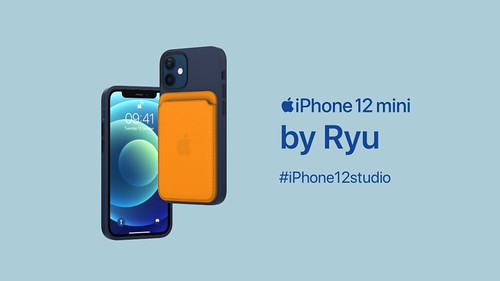
The Official Apple iPhone 12 mini Silicone Case with MagSafe Review

IMG_1973@0.5x

Apple has been making first party iPhone cases for several years by now, but I have largely steered clear of buying them due to their higher prices and lack of full coverage of the body (iPhone 6 to 11 cases). They offer less than ideal protection, does not show off the beauty of the iPhone body, and cost 2 to 5 times the prices of the most popular iPhone cases on the market. To me the official Apple cases were a no go.

IMG_2065 2@0.5x

Full Protection

With the introduction of the iPhone 12, and the return to a iPhone 5-like form factor, the Apple official cases now cover the phone bodies completely. On top of that, they officially support MagSafe, enhancing the strength of the hold of the MagSafe Charger to the phone. The Apple cases also now show an interesting animation on the display when they are put on the iPhones, with their colours reflected in the animation, The iPhone 12 Apple cases are therefore quite a bit better than their predecessors. However, they also carry a higher price tag.

I managed to purchase an official Apple Silicon Case for the iPhone 12 mini in Dark Navy at a price lower than the MSRP. After using it for more than a month, I have some thoughts.

IMG_1977@0.5x

Liquid Silicone

The official Apple Silicone cases are made of a material called liquid silicone, which gives it a very rubbery feel, increasing the grip when you hold the phone in your hand, but also picks up lint every time the phone is in your pocket. They are quite a bit different from most of the other cases in the market, which typically use TPU, Polycarbonate, or a combination of both. There is also a microfibre lining on the inside, presumably to keep the back of your iPhone clean when it is inside the case.

More problems than solutions?

I find the rubbery surface both extremely helpful in maintaining my grip, but also extremely uncomfortable to touch. The microfibre lining may also trap dust and make it harder to clean, causing scratches over time as the trapped dust rubs against the back of the phone. It is

First Party MagSafe

I like the hold of the magnets to the MagSafe charger, as it is way stronger than when I was using the iPhone 12 mini with the Spigen Ultra Hybrid (TPU sides with Polycarbonate back). The Apple MagSafe Wallet will likely be more secured with the MagSafe case than with a random third party case. The stronger hold also means that it will work with chargers that are meant to hold the iPhone suspended in mid air by MagSafe, like the Belkin 3-in-1 wireless charger with MagSafe.

Conclusion

Will I buy another one? Yes, if I can get it at a discounted price, definitely. Will I recommend it for everyone? It really depends. For most people the MagSafe ecosystem is not a necessity, and diving into it requires a bunch of spare cash. Third party cases with MagSafe-like magnets built in can be a cheaper alternative, but the quality control on those are suspect, as online reviews have shown that more than a few have less than ideal magnet strength. The iPhone 12 works with normal Qi chargers, and MagSafe is ultimately a nice to have, at least until the time when Apple removes the Lightning port from the iPhones.

MagSafe on the iPhone 12/mini/Pro/Max

Untitled

MagSafe, if it is not already painfully obvious, is not a new technology. It is based on Apple’s implementation/fork of the Qi wireless standard, and as such, has all of the cons that come along with Qi.

Is there a reason for you to specifically seek out MagSafe charging as opposed to just using a standard Qi charger?

Heat

One big issue with Qi charging has always been heat, the faster the charging the greater the heat produced during the charging process, the faster your phone battery’s lifespan will deplete. Android manufacturers have no qualms about implementing the fastest charging standards, both wired and wireless, for generally they expect you to hold on to an Android phone for 3 years at the most, for Android updates are only generally available for phones up to three years (most phones only support two years’ worth of updates). If your phone battery dies during those two to three years, all the better for them, as you will be forced to buy another phone.

Apple’s Qi implementation

Apple has always implemented Qi at a limited capacity compared to what the spec is capable of, at first 5W, then 7.5W when used with Apple spec-ed Qi chargers. Last year’s 11 Pro implemented 10W charging, but that was a one-off, as you cannot get 10W standard Qi charging from this year’s 12 Pro or 12 Pro Max.

MagSafe = Qi?

With MagSafe, Apple has chosen to implement Qi charging in a specific and strict way to mitigate the cons of Qi charging. The coils are smaller than what you will find on most Qi chargers (probably to limit heat creation), and the magnets in the MagSafe system are intended to keep the coils as close as possible to the perfect charging spot to optimise charging efficiency. Apple claims that the smarts in the MagSafe charging puck paired with the PD3.0 9V 2.22A charging profile will be able to quickly adapt to temperature changes and quickly adjust the power output to the phone efficiently to manage heat.

MagSafe charging warms the iPhone 12 mini

From my own testing over the weekend, there is no doubt that the iPhone 12 mini is warm when charging over MagSafe compared to charging over my trusty Apple 12W charger (stone cold). However, it does seem to produce even more heat when charging with my 7.5W Qi charger.

Is MagSafe bad?

So is MagSafe bad for your iPhone 12? It is likely a better solution than standard Qi charging, and likely eats away at the lifespan of your iPhone battery at the same rate as if you are using a USB-C fast charger to fast charge your iPhone all the time.

The Ecosystem

MagSafe, however, is more than the charging puck and the magnets in the iPhone 12 body. Apple intends for it to be an ecosystem of accessories that can attach themselves to your iPhone to provide additional functions, even if you have an (Apple branded) iPhone case on. Right now all Apple is producing are their iPhone 12 case lineup and the MagSafe wallet. Belkin has a car mount available, but there are no reviews of that accessory yet.

Conclusion

Should you go MagSafe?

Sure, why not? If you are already buying an iPhone 12/mini/Pro/Max it makes no sense not to try out the new feature for $59. I do hope better accessories are in the pipeline.

Apple introduces iPhone 12 Studio

Screenshot 2020-11-09 at 12.19.33 AM

Seriously?

This is created in the style of the Apple Watch Studio, where you can “build” your perfect Apple Watch case and band combination, and then purchase it straight from Apple.

Untitled

What is different here is that while the Apple Watch Studio is necessary if you do not want the default case and band combos Apple provides on its Watch page, every option in the iPhone 12 Studio, with the exception of the iPhone 12 itself, is an add-on or an optional purchase. You need to choose an Apple Watch band to go along with your Watch purchase, as they are sold as a bundle. But you do not have to buy Apple’s first party cases, and definitely not Apple’s MagSafe wallet, which is widely ridiculed since its introduction.

Untitled

Is the iPhone 12 Studio necessary? Definitely not. But rather than purchasing your chosen combination of iPhone 12+case+MagSafe Wallet outright, the options to export your ideal combination to someone else may be the hint they need from you to get you your early Christmas present.

Try it out on your iPhone now.

I don’t know if I should buy the iPhone 12 Pro Max or iPhone 12 mini

IMG_1833At the Apple Store looking at the accessories for the iPhone 12.

Less than 24 hours from Preorder Day, I am facing a dilemma – should I buy the 12 mini or should I go ahead and go straight for a 12 Pro Max?

The Plus size iPhones

I have always been using the plus size phones, ever since the 6s Plus came out. They have been hard to control one handed, and thus I have always stuck bunker rings on the back of the iPhone cases to make them usable. Simply put, I cannot control any of the iPhones today without a bunker ring. That is also why I have not been utilising wireless charging for the iPhones since the 8 Plus, as the bunker rings were preventing the iPhones from getting a proper charge.

The Pro Max is really heavy

The plus size phones also used to be thinner and lighter during the 6 Plus to 8 Plus era, but beginning with the Xs Max, they have grown in both absolute size and weight. The 11 Pro Max is now so heavy that when I am using the phone in bed, it always feels like my hand/finger is going to break from holding the phone up above my face. According to Apple, the iPhone 12 Pro Max has the exact same weight as the iPhone 11 Pro Max.

Finally the return of a mini iPhone

This year, due to the introduction of the iPhone 12 mini, I had made up my mind to try out the smaller phone at launch, with the idea that if I do not like it, I can always let go of the 12 mini some months later, and get a 12 Pro Max at a lower price from alternative resale channels then.

iPhone 12 Pro component shortages?

However, today’s news that Apple is having issues locating enough components for the iPhone 12 Pros (and likely the Pro Max, since they share similar components) now make me wonder if I have made the correct decision to preorder the 12 mini tomorrow. Maybe I should just go ahead and order the Pro Max first tomorrow and only switch to a 12 mini in a few months if I do not like it?

Upgrade later? Downgrade later?

I have always preferred to have the 512GB version of the Pro Max, but however, I can not afford Apple’s MSRP for that particular model. Preordering tomorrow will mean that I have to settle for the 256GB, and might regret my decision in a few months. Also, as the prices of the Pro models are a lot higher, their value also drop quite a bit more in the resale channels after some time, compared to the regular models. Downgrading from a 12 Pro Max to a 12 mini runs the chance that I will likely lose more money overall than if I upgrade from a 12 mini to a 12 Pro Max after a few months. And money is important in a year where I am jobless. Seriously I should not even be buying the iPhone 12, but this is the only time of the year when I am the happiest, and saving up to purchase the yearly iPhone is one of the main drivers keeping me sane from work (and for this year, from COVID-19). So I really want one.

But I still do not know what I want.

5G in Singapore with the iPhone 12 / Pro / mini / Max

Screenshot 2020-10-31 at 8.38.50 PM

Now that you have decided which iPhone 12 you will purchase (or have already purchased one), the next thing that you are likely concerned about is the network service, for one of the headlining features of the iPhone 12 series is after all, 5G.

Sub-6GHz 5G in Singapore

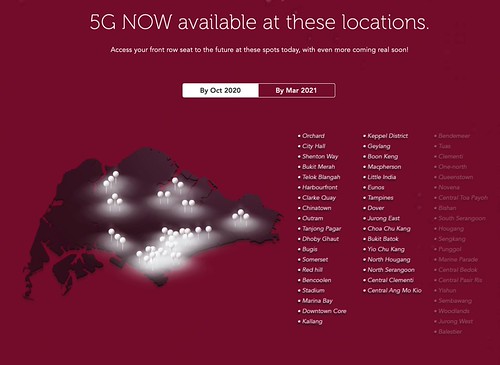
All current iPhone 12 models that are not produced for the American market do not support mmWave, only sub–6GHz. In Singapore, the three main telcos, Singtel, M1 and Starhub (M1 and Starhub bidded as a joint entity) have won the two licenses available to build the nationwide 3.6GHz 5G network, and so it is likely that anyone looking for 5G services locally right now should expect that only the Big Three will offer it, for now at least.

If your main network is a MVNO (like mine is), please forget about 5G for the time being.

5G coverage, according to M1, Starhub and Singtel (accurate on 31st Oct 2020)

Here is M1’s coverage map.

Screenshot 2020-10-31 at 8.21.47 PM

Here is Starhub’s coverage map.

Screenshot 2020-10-31 at 8.24.03 PM

It covers the following locations;

Screenshot 2020-10-31 at 8.36.35 PM

And finally, here is Singtel’s coverage map.

Screenshot 2020-10-31 at 8.25.35 PMAreas in grey will only be live by March 2021

How much does 5G cost in Singapore?

Both Starhub and Singtel appears to only allow you access to 5G if you sign up for one of their postpaid plans that include 5G specifically, with all the shackles of traditional mobile plans.

Screenshot 2020-10-31 at 8.27.48 PM
Screenshot 2020-10-31 at 8.29.58 PM

M1 is the only telco locally that seem to allow you to purchase 5G as a “booster pack” to their SIM-only plans with pricing structures similar to those of the local MVNOs.

Screenshot 2020-10-31 at 8.32.15 PM

Will you be going 5G? Or will you wait until the technology matures?

Which iPhone 12 to Buy? Top Features to Consider and Price Differences (in Singapore Dollars)

apple_iphone-12_color-blue_10132020_big_carousel.jpg.large_2x

Thanks to 2020 and the weird release schedules of the various iPhone 12 models this year, many potential buyers are likely still undecided on which iPhone 12 version to buy. With preorders for the two most interesting models (iPhone 12 mini and iPhone 12 Pro Max) coming up in exactly one week’s time from the time of this posting, have you decided which iPhone 12 you want? Are you confused by the number of models this year and the difference in features between each model? Fret not, I have prepared a two-step solution to your first world problems.

1. Select the color of your iPhone 12 series

IMG_1718
All available colors of the iPhone 12 and iPhone 12 mini.

IMG_1723
All available colors of the iPhone 12 Pro and iPhone 12 Pro Max (Pardon the lighting).

2. Select the storage capacity of your iPhone 12 series

I have prepared two sets of data, one for the 128GB models and one for the 256GB models (512GB models are $330 more). Look at the respective charts for the features of each model and their price differences. 64GB is not listed because it is frankly speaking, too little storage. As the file sizes of iOS and apps grow in the future, you will likely regret saving that little bit of money now. Besides, if your budget can only afford you the 64GB models, you do not need the following information in the first place.

All prices are in Singapore Dollars (SGD).

The 128GB Models

Model Top Features Body 128GB $(SGD)
iPhone 12 mini
(5.4-inch display)
Mini size
Pocketable
Cute
Glossy Back
Matte Sides
(aluminium)

$1219
iPhone 12
(6.1-inch display)
Standard Model
Same accessories
as 12 Pro
Glossy Back
Matte Sides
(aluminium)

$1369 (+$150)
iPhone 12 Pro
(6.1-inch display)
Premium Feel
LiDAR
ProRAW
Telephoto lens(2X)

Matte Back
Glossy Sides
(stainless steel)

$1649 (+$280)
iPhone 12 Pro Max
(6.7-inch display)
Premium Feel
LiDAR
ProRAW
Biggest screen
Longer Telephoto(2.5x)
Better Main Sensor
Matte Back
Glossy Sides
(stainless steel)
$1799 (+$150)

The 256GB Models

Model Top Features Body 256GB $(SGD)
iPhone 12 mini
(5.4-inch display)
Mini size
Pocketable
Cute
Glossy Back
Matte Sides
(aluminium)

$1389
iPhone 12
(6.1-inch display)
Standard Model
Same accessories
as 12 Pro
Glossy Back
Matte Sides
(aluminium)

$1539 (+$150)
iPhone 12 Pro
(6.1-inch display)
Premium Feel
LiDAR
ProRAW
Telephoto lens(2X)
512GB Option(+$330)

Matte Back
Glossy Sides
(stainless steel)

$1819 (+$280)
iPhone 12 Pro Max
(6.1-inch display)
Premium Feel
LiDAR
ProRAW
Biggest screen
Longer Telephoto(2.5x)
Better Main Sensor
512GB Option(+$330)
Matte Back
Glossy Sides
(stainless steel)
$1969 (+$150)

So, which iPhone 12 will you buy?

Is the iPhone 12 mini too small? Or too big? Coming from the iPhone 5, iPhone 5s and the iPhone SE (2016)

Untitled

Ignore the cling wrap please LOL

Having seen the iPhone 12/Pro in person, I am pretty convinced that without a case, the size of the 12/Pro is probably just nice for many people. Which bring the questions;

  1. Will the 12 mini be too small?
  2. Is this the real successor to the iPhone 5s size phones that 5s and SE (2016) users have been wanting since 2018?

Too Small?

What constitutes ‘too small’? Is the iPhone 5s too small? Is the iPhone 4 the right size? Everyone’s idea of the perfect size for phones has been changing through the last decade, no thanks to the ever growing sizes of phone displays, as phone manufacturers find ways to justify increasing their product prices.

One way to determine if it is too small is obviously through the physical dimensions of the phone. Take note that a “5.4 inch display” really does little to inform you of how the iPhone 12 mini will feel in your hand. It is, after all, physically even smaller than the iPhone 8 which had a 4.7 inch display.

Apple’s site states the following dimensions for the iPhone 12 mini – height 131.5mm, width 64.2mm and depth 7.4mm, with a weight of 133 grams.

The iPhone 5, iPhone 5s and iPhone SE (2016)’s dimensions are – height 123.8mm, width 58.6mm and depth 7.6mm, with a weight of 112/113 grams.

Looking at the numbers we can see that the iPhone 12 mini is a little taller, a little wider, and actually a little THINNER than the iPhone 5, iPhone 5s and iPhone SE (2016).

True Successor to the iPhone 5s?

Untitled

Here is a photo of the iPhone 12 mini case in my asian size male hand.

Untitled

Comparing it with the iPhone 5s in a case, the additional height and width is barely noticable. If you are coming from an iPhone 5, iPhone 5s or iPhone SE (2016), you are barely going to notice a difference in the feel of the iPhone 12 mini (in a case) in your hand. Unless of course, if even the iPhone 5s is too big for you, you probably need a feature phone (if you can still find one).

First Impressions of the iPhone 12 and iPhone 12 Pro, and Also the iPad Air

iPhone 12

I did not order one of the 6.1 inch iPhone 12s, simply because I am way more interested in either the iPhone 12 mini and the iPhone 12 Pro Max. So no physical phone for me to play for now.

How does one get to see the actual phones in an Apple Store in these pandemic days? Why, an Apple Shopping Session of course.

I booked one for Saturday at the nearest Apple Store to me, Apple Jewel Changi Airport.

After a good dinner, some queuing and the usual check-in process, I was accomplished by an elderly female staff member, who was friendly and tried her best to accomolate my wishes to see the various items. She was unfortunately probably the most clueless staff that I have ever met in a local Apple Store, often making mistakes about very basic terms and features and unable to answer any of my questions. I always wonder what standard makes the cut for being an Apple Staff, I guess being friendly and unthreatening is all that is required these days.

IMG_1685

The Store was not too crowded when I arrived around 5pm (my appointment was at 7:30pm), but by the time my appointment rolled by there was a long queue just to get in. The Store was pretty crowded when I got served. The female Staff led me to a table where there were only four iPhone 12/Pros, as the table with all the current models was occupied. After some attempt by her to give me a basic sales talk, I got to some serious scrutinizing.

The first thing that struck me was the screen. The OLED screen on the 12/Pro look really crisp and nice, even though it was supposed to be on the same level as that of my iPhone 11 Pro Max. Maybe I am not just used to seeing the OLED screens without any glass screen protectors in between, but they were really nice. The new body shape definitely feels a lot nicer in the hand, and MagSafe for iPhone is COOOLLLL. Decided to go MagSafe for my eventual iPhone 12 charging right there and then.

IMG_1718

The most important aspect of the iPhone 12/Pros is of course, the colours.

This year’s lineup of colors for the non-Pro models are pretty lame, with a mint and pale green and a salmon red colour that is closer to orange than to red. The white model also looks like it has a slight champagne tone in the Apple Store lighting. While I will have definitely preferred a more vibrant blue, there is no mistaking that the iPhone 12 Blue is the best colour in the whole line-up, both non-Pro and Pro phones. The Black is nice too. Anyone going for a non-Pro iPhone 12 should go for either the Blue or the Black, the other colours really do not cut it.

IMG_1723

Pro-wise, all the colours are pretty dull and average, even compared to last year. Apple is pushing Pacific Blue as the colour to buy, but I have to say that it is probably even more boring than Midnight Green last year. Graphite is looking decent and safe, and Gold is for the rich Asians/wannabes. Buy Silver if you want to polish the stainless steel frame after every scratch. If you have to get a iPhone 12 Pro or Pro Max, maybe buy the Pacific Blue or Graphite. But actually they are all decently average, so any colour is fine. The expensive iPhones never had the best colours anyway.

12

Now you know that with the Apple Store’s lighting it was next to impossible to test the capablities of the iPhone 12’s cameras, but on first looks they do not seem too different from the cameras of the iPhone 11 and 11 Pros. The biggest upgrade has to be the availablity of Night Mode in all the cameras, instead of just the wide cameras in the 11 series. Again, cannot be test in store. You just have to take Apple’s word for it that they are better this year.

IMG_1722

Oh, and the Apple Silicon cases are totally a must-buy this year. For the first time since Apple made iPhone cases (non-battery ones) they have a range of cases that cover the bottom of the iPhone. Pair that with the MagSafe capability makes the Silicon Case a must buy this time round.

IMG_1719

Lastly, I took a look at new iPad Air colours before leaving. Sky Blue is so nice on the Air. Why do we not have that colour on the iPhones? Apple (or Alan Dye) is an arse.

Which iPhone 12 Should You Buy?

Apple_announce-iphone12pro_10132020

Writing this after the 6.1 inches 12 and 12 Pro preorder day is over sounds counterproductive, but despite recent reports of Apple’s own predictions of which iPhone 12 will sell well, for the bulk of people who are likely to be early buyers, the iPhone 12 mini and the iPhone 12 Pro Max are more likely to be the preferred models.

Coming from a Singaporean perspective, the easy answer here is to buy either the 128GB or the 256GB models of the 12 Pro Max, with the rational that since you are already spending upwards of 1.5K for most of the regular sized models, the Max at 1.8/1.9K is not that far off price wise, not to mention that the Max is spec-wise, the best iPhone 12 in the whole line-up with its improved camera sensor.

What about the regular 12 and 12 mini then? The mini’s price points this year is exactly the same as that of last year’s iPhone 11, and simply put, if you are unwilling to spend the kind of money needed to buy a Pro iPhone, the ambiguous prices for the regular 12 ($1369 for 128GB, $1539 for 256GB) and the kind of tradeoffs (no zoom lens, aluminum frame, less ram, no ProRAW) versus the Pro make the regular 12 the phone NOT to buy if you are looking for the best cost-performance ratio.

The mini, however, is quite a bit cheaper than the Pro Max for the same capacities (mini at $1219 for 128GB vs Max at $1799 for 128GB), has the highest PPI screen, and the added benefit of fitting the one hand use of people who refused to add a bunker ring to the back of their phone cases. With the allure of the MagSafe charger and accessories this year (making it hard to add a bunker ring if you want to use them), a small phone is very attractive. If you do not want to spend Pro Max money, and want to use your iPhone with MagSafe, and have no problem with the smaller screen, the mini is your iPhone 12 of choice.

Lastly, the regular Pro is really only for people who absolutely refused to buy the Max, for the price difference is only $150 but you get the better sensor, you get the longer range zoom lens, and you get a bigger display for what you will spend for lunch for three people in a stationary Airbus A380.

All prices in Singapore dollars